Braised Short Ribs with Figs, Rosemary & Potato Purée (Oven, Slow Cooker, or Stovetop)
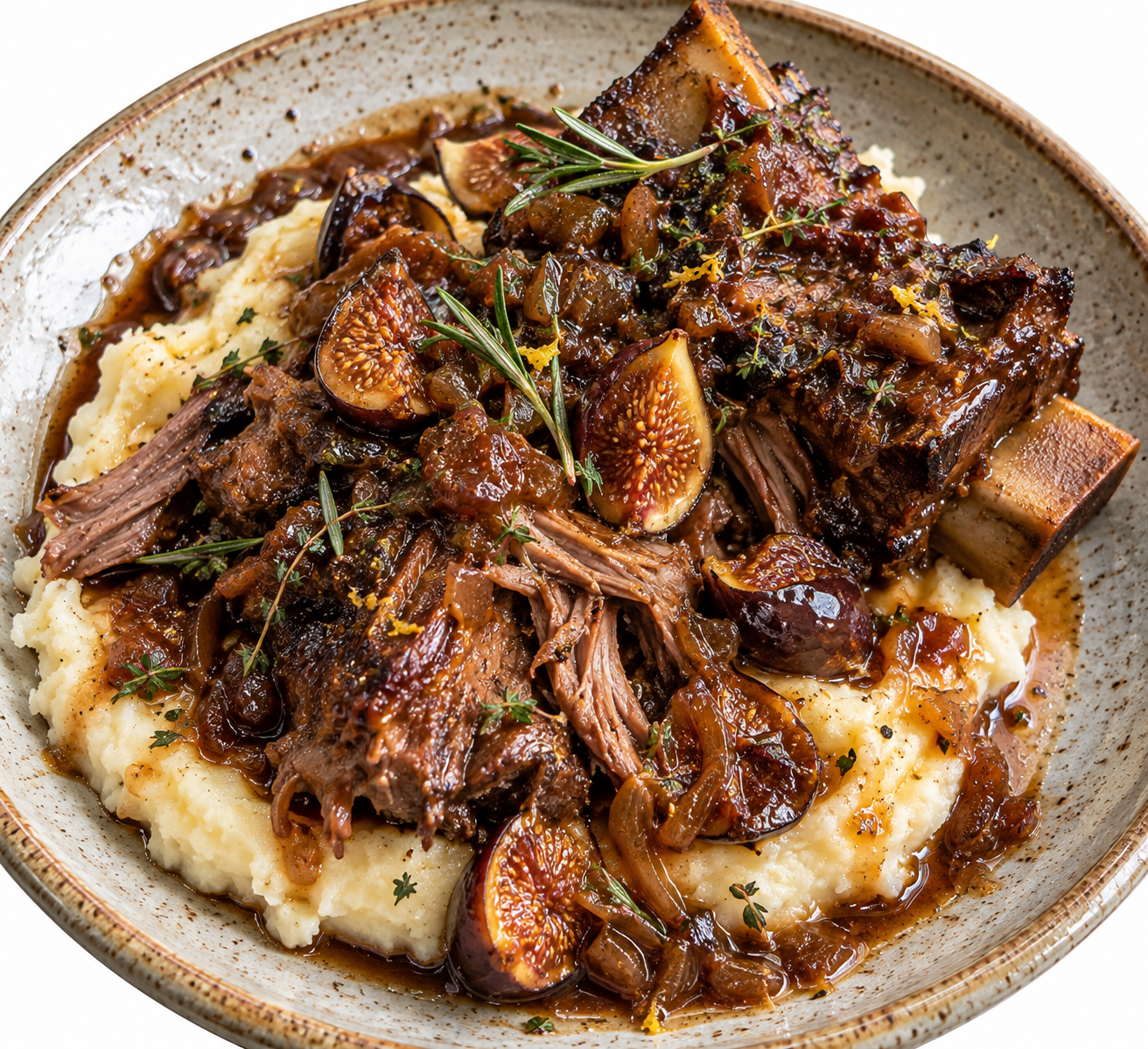
Bone-in short ribs braised slowly in red wine and bone broth with jammy figs, shredded into a glossy rosemary-lemon sauce and piled over silky potato purée. Three ways to cook it, depending on your day.
Yield: serves 6–8 · Active: 45 min · Total: about 4 hr in the oven, 3–4 hr on the stovetop, or 5–8 hr in a slow cooker (best made a day ahead) · Season: California Black Mission figs come in a small early crop in June and the main crop August–October; dried figs work all fall and winter, which is peak braising weather · Cuisine: French · American farmhouse · Best eaten: late afternoon or early evening, ideally the day after cooking
Short ribs are the ultimate braising cut. They’re bone-in, well-marbled and full of collagen and connective tissue, so they’re tough if you cook them fast but become fork-tender and silky after a few slow hours in wine and broth. Every farmhouse tradition has its own version: Burgundy’s boeuf bourguignon, Italy’s brasato al Barolo, the American Sunday pot roast. All of them follow the same simple logic: a tough cut, a little acid, low heat and time.
This version leans into late summer and fall. Figs go into the pot for the last stretch of braising and turn jammy, sweetening the sauce. Then the meat gets pulled into big pieces, folded back into the reduced sauce with fresh rosemary and lemon zest, and spooned over a cloud of Yukon Gold potato purée. Make it on a Saturday for Sunday dinner: it tastes even better the next day, and chilling it overnight lets you lift the fat right off the top for a cleaner sauce.
Prefer a fruit sauce with greens? See my Red Wine-Braised Short Ribs with Blackberry Sauce, Silky Collards, and Quick-Pickled Vegetables.
Ingredients
Short ribs
5 lb bone-in grass-fed beef short ribs (English-cut, about 3 inches thick)
1 tbsp Baja Gold sea salt
1½ tsp freshly cracked black pepper
3 tbsp beef tallow or lard
Braise
2 large yellow onions, diced
3 carrots, diced
3 celery stalks, diced
4 cloves garlic, minced
3 tbsp tomato paste
1½ cups dry red wine (Cabernet Sauvignon, Merlot or Côtes du Rhône)
3 cups beef bone broth, homemade if possible
3 bay leaves
4 sprigs fresh thyme
2 sprigs fresh rosemary
4 fresh sage leaves
Optional: 2 strips of orange peel and 4 lightly crushed juniper berries, for a wintry note
Figs and finish
1 pint fresh Black Mission figs, stemmed and quartered (or ¾ cup dried figs, halved)
2 tbsp fresh rosemary, finely chopped
Zest of 1 organic lemon
½ cup fresh parsley, chopped
Potato purée
3 lb Yukon Gold potatoes, peeled and cubed
¾ cup heavy cream (raw if you have it) or whole milk, warmed
6 tbsp grass-fed ghee or butter
Baja Gold sea salt, to taste
Swaps
Wine-free: use 4½ cups bone broth plus 2 tbsp aged balsamic or red wine vinegar. The acid helps tenderize the meat and brightens the sauce.
Other cuts: bone-in chuck works for a more budget-friendly version. Lamb shanks use the same method with a slightly shorter braise (2½–3 hours in the oven).
Grain-free mash: swap the potatoes for cauliflower or celery root purée. See my Velvet Vegetable Purées.
Method
Prep and sear
Salt ahead. Pat the ribs dry and season all over with the salt and pepper. For the best flavor, do this the night before and refrigerate uncovered; at least 1 hour is fine. Take them out 45 minutes before searing.
Sear. Heat the tallow in a large Dutch oven over medium-high heat. Brown the ribs in batches, 3–4 minutes per side, until deeply browned with dark edges, about 10 minutes per batch. Don’t crowd the pot, or they’ll steam instead of sear. Move them to a plate.
Build the base. Lower the heat to medium. Add the onions and cook 5 minutes, until golden. Add the carrots, celery and garlic and cook 5 minutes more. Stir in the tomato paste and cook 2 minutes, until it darkens. This caramelized tomato paste gives the sauce much of its depth.
Deglaze. Pour in the wine, scraping up all the browned bits, and simmer until reduced by about half, 5–8 minutes.
Set up the braise. Add the broth, bay leaves, thyme, rosemary, sage and the orange peel and juniper, if using. Nestle the ribs back in, bone-side up. The liquid should come about two-thirds to three-quarters of the way up the meat. Bring to a gentle simmer.
Choose your method
6. Braise until fork-tender and pulling from the bone:
Oven (most traditional): cover and braise at 325°F for 3–3½ hours.
Slow cooker (most hands-off): move everything to a slow cooker. Cook on low 7–8 hours or high 4–5 hours.
Stovetop: keep it on the lowest heat, partly covered, at a bare simmer with just a few lazy bubbles. Cook 2½–3½ hours, turning the ribs every 45 minutes or so and adding a splash of broth if the liquid drops below halfway.
Add the figs. Tuck dried figs into the pot for the last hour of braising, or fresh figs for the last 30 minutes, so they turn soft and jammy without falling apart.
Make ahead (recommended)
8. Chill overnight. Let the pot cool, then refrigerate the ribs in their liquid overnight. In the morning, lift off the solid layer of fat; it’s much easier than skimming hot. Save that tallow for roasting vegetables. Rewarm gently before finishing.
Make the potato purée
9. While the sauce reduces, steam the potatoes 15–20 minutes, until very tender. Pass them through a ricer, or mash them well; a food processor or blender turns potatoes gluey. Beat in the warm cream, ghee and salt until smooth and silky. Keep warm.
Finish the sauce
10. Separate. Lift the ribs and figs out of the pot. Strain the liquid through a fine-mesh sieve, pressing on the vegetables, then skim off any fat (if you didn’t chill it overnight).
11. Reduce. Simmer the strained liquid over medium-high heat until glossy and thick enough to coat a spoon, 10–15 minutes.
12. Shred and fold. Pull the meat off the bones in big pieces and discard the bones and any tough bits. Return the meat and figs to the sauce with the chopped rosemary and lemon zest and warm through gently. Stir in the parsley.
Serve
13. Spoon a generous swoosh of potato purée onto each plate. Pile on the short ribs, figs and plenty of sauce, then finish with a little extra lemon zest and parsley.
Serve it with: a simple green salad with a sharp vinaigrette, roasted root vegetables, sautéed wild mushrooms with herbs, or garlicky greens. To drink, a robust red like a Cabernet, Burgundy or Italian red, or sparkling water with rosemary and a squeeze of lemon.
Storage: Refrigerate up to 4 days, or freeze up to 3 months (the meat in its sauce; make the purée fresh). Reheat gently with a splash of broth if the sauce has thickened. For 12+ guests, double the recipe and braise in two Dutch ovens or a large roasting pan covered tightly with foil.
Wine note: most of the alcohol cooks off in a long braise, but a little remains. Use the wine-free swap for kids, pregnancy or anyone avoiding alcohol. Cream note: raw cream isn’t raw once it’s heated, but it still adds richness.
Nourishment Notes
Bone-in short ribs are one of the most nourishing cuts on the animal. The long, slow braise pulls collagen and gelatin out of the bones and connective tissue into the sauce, bringing glycine and proline, amino acids that support the gut lining, joints, skin and connective tissue. Glycine also helps the body make glutathione, one of its main antioxidants, and balances the methionine in muscle meat. Traditional cultures got that balance naturally by eating braises and broths, not just steaks.
Grass-fed beef brings heme iron, zinc, B12, B6 and creatine in their most absorbable forms. Grass-finished cattle also carry more omega-3s, CLA and fat-soluble vitamins A, D, E and K2. Bone broth as the braising liquid adds even more glycine, proline and minerals.
Red wine brings acidity that helps tenderize the meat, and some of its polyphenols stay in the sauce. Onion, carrot and celery add prebiotic fiber, carotenoids and savory depth. Rosemary, thyme and sage are the classic herbs for red meat, with antioxidant compounds like carnosic acid and thymol.
Figs are one of the oldest cultivated fruits, grown in the Near East for more than 11,000 years. They bring fiber, potassium, calcium and polyphenols, and their jammy sweetness balances the rich beef. Lemon zest adds brightness and citrus oils.
Yukon Gold potatoes bring potassium, vitamin C, B6 and slow-burning starch to anchor a cold-weather plate. The ghee and cream add richness and fat-soluble vitamins, and help you absorb the vitamins in everything else.
For your cycle: this is a great menstrual-phase meal. The heme iron, zinc and B12 in the beef help replenish what you lose, and the warm, slow-cooked sauce is easy on digestion. In the luteal phase, the potato purée gives you the slow carbs your body asks for before your period, and the glycine-rich sauce can help you feel calm and sleep well.
Sourcing
Short ribs: grass-fed and grass-finished, English-cut bone-in, from a local farm or butcher, US Wellness Meats or White Oak Pastures
Bone broth: homemade (see Broths 101), or a frozen pasture-raised broth from a local farm
Tallow: grass-fed beef tallow, or save the fat skimmed from this braise for next time
Red wine: an organic or biodynamic dry red with low sulfites
Figs: fresh Black Mission figs from a farmers’ market in season, or unsulfured dried figs
Potatoes: organic Yukon Golds. Potatoes are among the most heavily sprayed crops.
Cream and ghee: grass-fed (raw cream from realmilk.com or a local farm if you like) and grass-fed ghee
Tomato paste: organic, in a glass jar or tube
Herbs: a farmers’ market or your garden
Sea salt: Baja Gold
— Anna aka Food Marshall