Grass-Fed Pot Roast
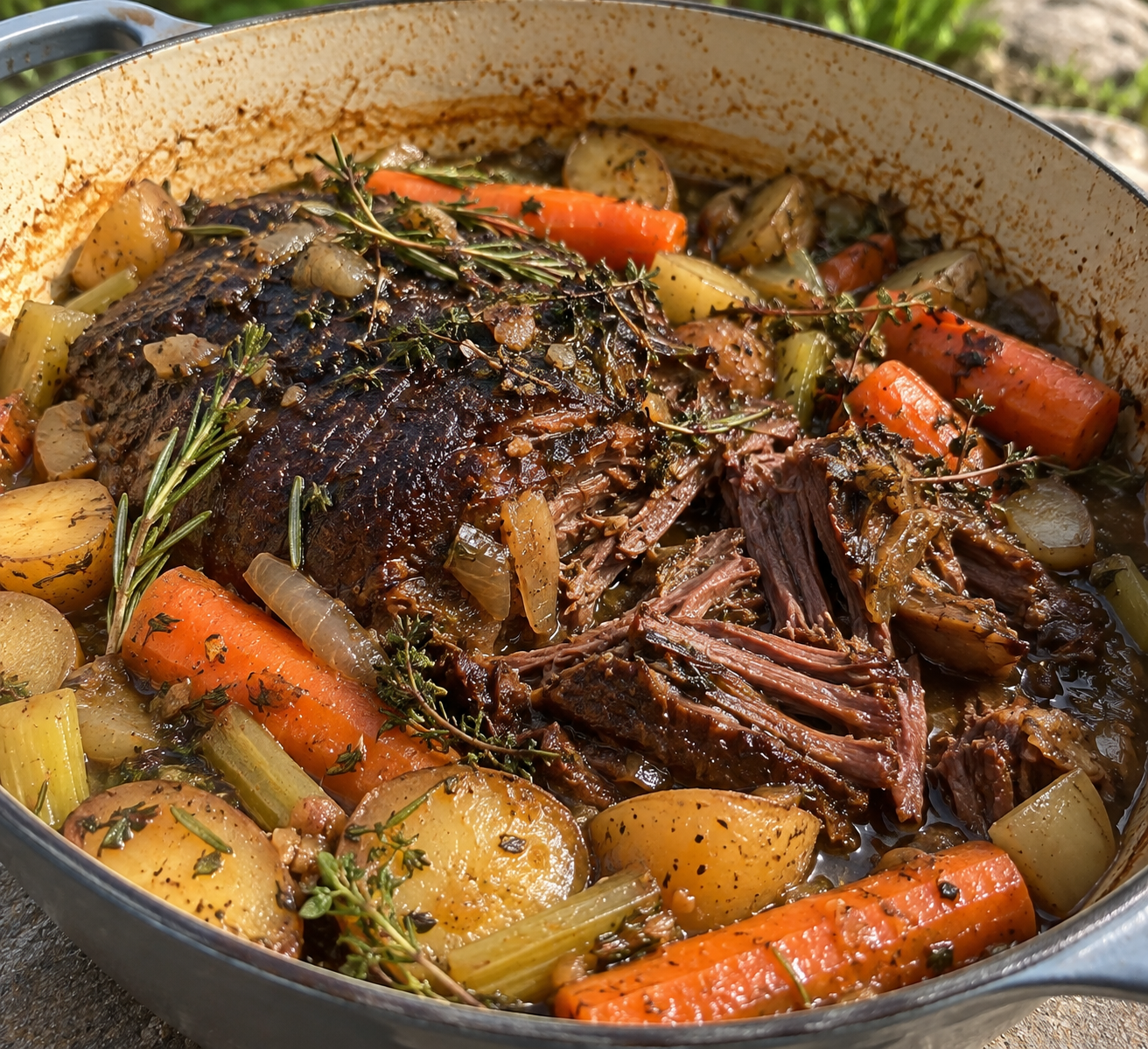
A whole grass-fed chuck roast, seared dark and braised low and slow with onions, garlic, rosemary, and thyme until it falls apart at the touch of a fork, with carrots, celery, and potatoes cooked right in the pot.
Yield: Serves 6–8 · Active: 30 min · Total: 4–4½ hours, plus an overnight dry brine · Best in North America from fall through early spring · Best eaten: early evening
Ingredients
4 lb grass-fed beef chuck or shoulder, in one piece
2 tbsp tallow or ghee
1 tbsp Baja Gold sea salt, plus more to finish
1 tsp coarse black pepper
2 yellow onions, quartered
6 garlic cloves, smashed
5 carrots, cut into 2-inch batons
3 celery stalks, cut into 2-inch lengths
1½ lb small red potatoes, halved
3 cups beef bone broth
4 sprigs fresh rosemary
6 sprigs fresh thyme
2 bay leaves
Method
Salt the roast the night before, and leave it uncovered in the refrigerator. Grass-fed beef is leaner than grain-finished, and it needs the head start.
Sear. Dry the surface hard with towels. Get a Dutch oven ripping hot, melt the tallow, and sear every face of the roast until it's the color of dark toast, about 4 minutes a side. Do not rush this, and do not crowd it. This is where the entire flavor of the dish is decided.
Build the braise. Pull the meat out. Drop the onions and garlic into the fat and let them take color, 5 minutes. Deglaze with a cup of the broth, scraping the bottom until it's clean. Return the roast, add the remaining broth, herbs, and bay, cover, and put it into a 300°F oven.
Add the vegetables. At 2 hours, add the carrots, celery, and potatoes around the meat.
Test for doneness. At 3½ hours total, test with a fork: it should slide in with no resistance and pull back out clean. Grass-fed shoulder generally wants 3½–4 hours, and it goes from tough to tender in a 20-minute window near the end, so start checking.
Rest 20 minutes in the pot with the lid cracked. Skim the fat, keep the fat, and roast potatoes in it next week.
Make a gravy (optional). For a thicker gravy, simmer the strained pan juices uncovered for 10–15 minutes, until reduced, or whisk in 1 tbsp arrowroot mixed with 2 tbsp cold water and simmer 1 minute.
Variations:
Nightshade-free: swap the potatoes for celery root and rutabaga.
Deeper flavor: add 6 halved cremini mushrooms and a strip of dried porcini to the braise.
Serve It With
The pot roast already has its vegetables, but a silky purée or a bright side makes it a feast.
Silky Buttery Cauliflower Purée: Simmer 1 head of cauliflower florets in salted water (or bone broth) for 10–12 minutes, until very tender. Drain well, then blend with 3 tbsp grass-fed butter, 2–3 tbsp cream, salt, and a pinch of nutmeg until completely smooth.
Roasted Purple Potatoes: Halve 1½ lb purple potatoes, toss with 2 tbsp of the reserved pot roast fat (or olive oil), rosemary, and salt, and roast cut-side down at 425°F for 30–35 minutes, until golden and crisp.
Carrot-Ginger Purée: Simmer 2 lb sliced carrots with a 1-inch piece of ginger in bone broth for 15–20 minutes, until very soft. Drain, saving a little broth, then blend with 3 tbsp butter, salt, and a squeeze of orange juice, adding broth until silky.
Bright Broccoli Purée: Simmer 2 heads of broccoli florets for 5–6 minutes, just until tender and still bright green. Drain, then blend with 3 tbsp butter, a little lemon zest, a handful of parsley, and salt. It's vivid green on the plate next to the dark beef.
More ideas:
Horseradish cream: whip ½ cup cream to soft peaks, then fold in 2 tbsp freshly grated horseradish, a squeeze of lemon, and a pinch of salt. It's the classic pot roast companion.
Gremolata: finely chopped parsley, lemon zest, and garlic, scattered over the meat to brighten all that richness.
Celery root or parsnip purée: made like the cauliflower purée, with a sweet, earthy flavor.
Creamy mashed potatoes or mashed sweet potatoes
Braised red cabbage with apples: sweet and sour, and perfect against the beef.
Garlicky greens: kale, chard, or collards sautéed with garlic in olive oil.
Roasted Brussels sprouts or broccoli: see my Roasted Brassicas: A Foundation Guide.
Crusty sprouted sourdough, for those who eat grains, to soak up the juices.
Pairs Well With
My Spiced Beet Slaw, served cold against the hot meat. The acid in the beets is the whole point.
Storage
Refrigerate the pot roast in its juices up to 4 days. It's even better the next day. Or freeze it up to 3 months. Reheat it gently, covered, in a 300°F oven or on the stovetop with a splash of broth. The purées keep refrigerated up to 4 days.
Nourishment Notes
Chuck is connective tissue, and connective tissue is collagen, and a long, low braise converts that collagen into gelatin you can feel on your lips when the sauce cools. Grass-fed beef carries conjugated linoleic acid and a better omega-3 to omega-6 ratio than feedlot beef, along with more vitamin K2, from the animal eating actual pasture. This is cold-weather food. Make it when the light gets short and your body starts asking for it.
For your cycle: The beef's heme iron, zinc, and B12 make this especially restorative during the menstrual phase, and the slow-braised gelatin and warming root vegetables are grounding in the luteal phase.
Sourcing
Chuck or shoulder roast — 100% grass-fed and grass-finished, from Alderspring Ranch, White Oak Pastures, US Wellness Meats, or a local farm
Beef bone broth — homemade from grass-fed beef bones (see my Broths 101), or Bonafide Provisions (organic, sold frozen)
Tallow or ghee — tallow rendered from grass-fed suet, or grass-fed ghee
Onions, garlic, carrots, celery, potatoes, and herbs — organic, from a farmers' market
Side dish vegetables — organic and seasonal: cauliflower, purple potatoes, carrots, broccoli, celery root, parsnips, and fresh horseradish root
Grass-fed butter and cream — organic, cultured butter from 100% grass-fed cows; raw or organic, grass-fed cream
Dried porcini (optional) — organic
Salt — Baja Gold sea salt; Maldon for finishing
— Anna aka Food Marshall