Seasonal Frittatas: One Method, Four Seasons
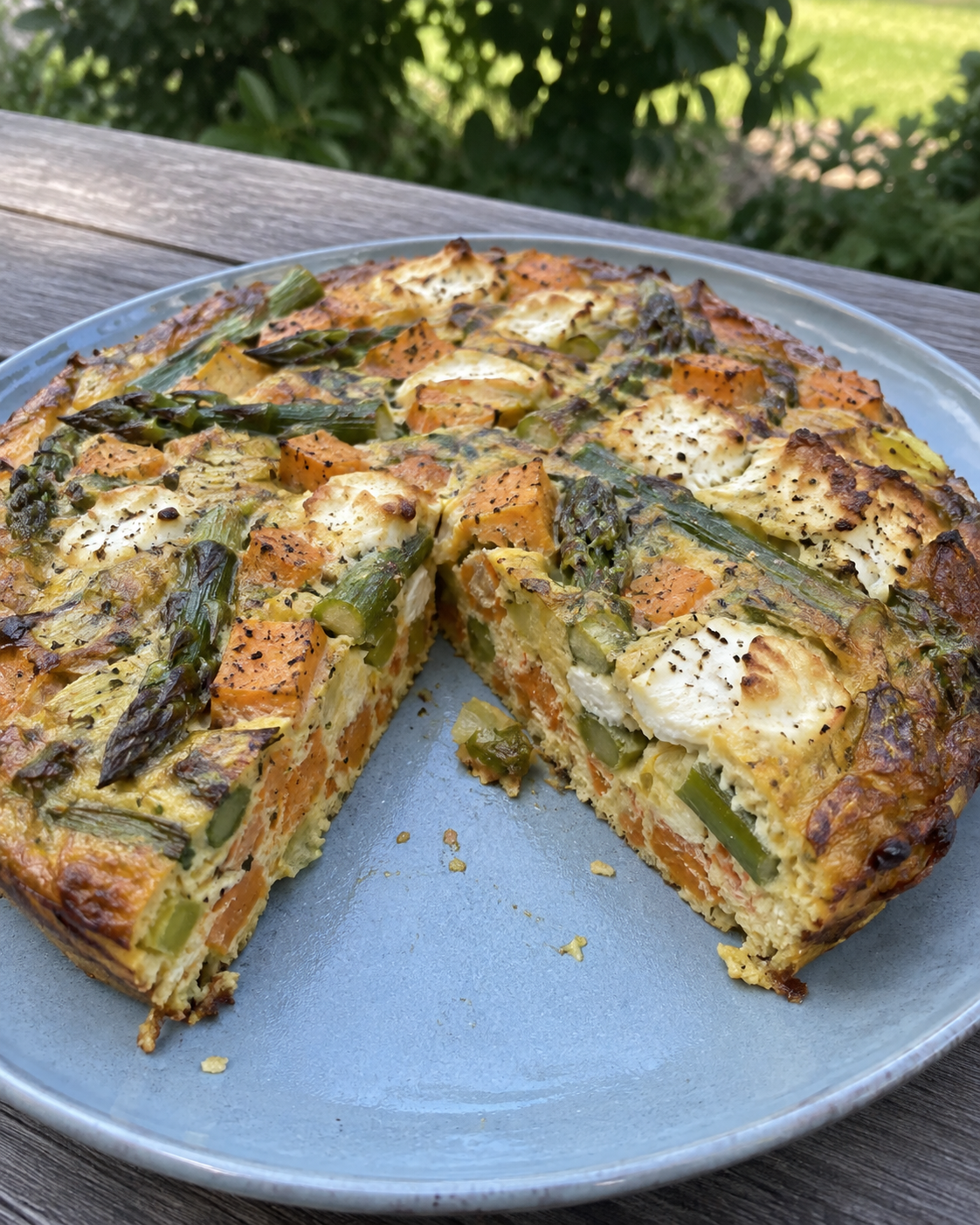
One master skillet frittata, with a filling for every season: spring sweet potato and asparagus, autumn wild mushrooms, and a hearty winter farm frittata with homemade herb sausage.
Yield: serves 6 (one 10-inch skillet); a 9×13 serves 10–12 · Active: 25–40 min · Total: 45 min–1 hr 15 min (plus 2 hours’ rest if making the sausage) · Season: spring asparagus March–June (February–May from California’s Delta, May–June in Michigan and Washington); summer tomatoes July–September; chanterelles September–November in the Pacific Northwest and November–February in California; winter squash harvested September–October and stored through winter, with kale sweetest after the first frost · Cuisine: American farm-to-table · Best eaten: in the morning, ideally after getting some early outdoor light
A frittata is one of the most forgiving dishes in my kitchen. It’s built on whatever the season and the farm are giving you, it feeds a table from one skillet, and it’s just as good cold out of the fridge the next day. This is how farm families have eaten for generations: real eggs, real meat, whatever’s growing, dense enough to fuel a full day of work.
The regenerative farm movement has quietly brought this kind of cooking back. Apricot Lane Farms in Moorpark, California, made famous by The Biggest Little Farm, is a working regenerative, biodynamic farm where what’s on the table reflects the land. The winter farm frittata below is my take on that tradition, made with pastured pork sausage I mix myself.
Below is one master method and a filling for each season. Learn the method once and you can swap in whatever’s at the market: chard for kale, sweet potato for squash, lamb for pork. It all works. Want a crust? See my Ancestral Quiches: Six Seasonal Variations.
The Master Method
Egg mixture (any season)
8 large pasture-raised eggs
¼ cup whole milk or cream (raw if you have it), or full-fat coconut milk for dairy-free
½ tsp Baja Gold sea salt
¼ tsp freshly ground black pepper
How it works
Preheat the oven to 375°F.
Cook the filling in stages in a 10-inch oven-safe skillet; cast iron is ideal. Cook each vegetable separately so it browns properly instead of steaming, then combine everything in the skillet. Spread it out evenly and take it off the heat. (Each season’s steps are below.)
Whisk the eggs. In a large bowl, whisk the eggs, milk, salt and pepper until the whites are no longer streaky.
Pour the eggs over the filling, tilting the skillet so they settle evenly. Scatter the cheese on top.
Bake 20–30 minutes, until the edges are puffed and pulling away from the pan and the center is just set with a slight wobble (160°F on a thermometer). A fuller skillet takes longer. Pull it a minute early rather than late; it keeps cooking as it rests, and overbaked eggs turn rubbery.
Rest 5–10 minutes, then garnish, slice and serve.
Pan options: an 8×8 baking dish works too, greased with butter or olive oil (bake time is the same). For a crowd, use a greased 9×13 with 12–14 eggs, ⅓ cup milk and 1½ times the filling, and bake at 350°F for 30–35 minutes.
Spring · Sweet Potato, Leek, Asparagus & Chèvre
Sweet roasted root, bright green asparagus and tangy goat cheese. Bake it in an 8×8 dish and it slices into neat squares, almost like a tart.
Filling
1 medium sweet potato, peeled and cut into ½-inch cubes
2 tbsp extra virgin olive oil or grass-fed ghee, divided
1 leek, white and pale green parts, halved, rinsed well and thinly sliced
2 tbsp filtered water
1 bunch asparagus, woody ends trimmed, cut into 1-inch pieces
2 tsp fresh oregano, chopped (or 1 tsp dried)
Baja Gold sea salt and black pepper
4 oz fresh chèvre, crumbled
Optional spring swap: a handful of morels, halved, cleaned and sautéed with the leeks
Steps
Heat 1 tbsp oil in the skillet over medium heat. Add the sweet potato and a pinch of salt and cook, covered, for 8 minutes, stirring once. Uncover and cook 4–5 minutes more, until tender and golden at the edges. Move it to a plate. (Or roast the cubes at 400°F for 20 minutes the day before.)
Add the remaining 1 tbsp oil, the leek and the water. Cook 6–8 minutes, until the leek is soft and the water has evaporated. This gentle “sweat” keeps leeks sweet and tender instead of browned.
Add the asparagus and cook 2–3 minutes, just until bright green. Return the sweet potato, add the oregano, season with salt and pepper and spread evenly.
Finish with the master method, crumbling the chèvre over the top before baking.
Summer · Tomato, Basil & Goat Cheese
Summer already has its own post: my Tomato, Basil & Goat Cheese Frittata, with peak-season tomatoes, torn basil and chèvre. For a quick variation, use the master method with sautéed zucchini, halved cherry tomatoes, basil and sheep’s milk feta.
Autumn · Wild Mushroom, Onion & Herb with Goat Cheese
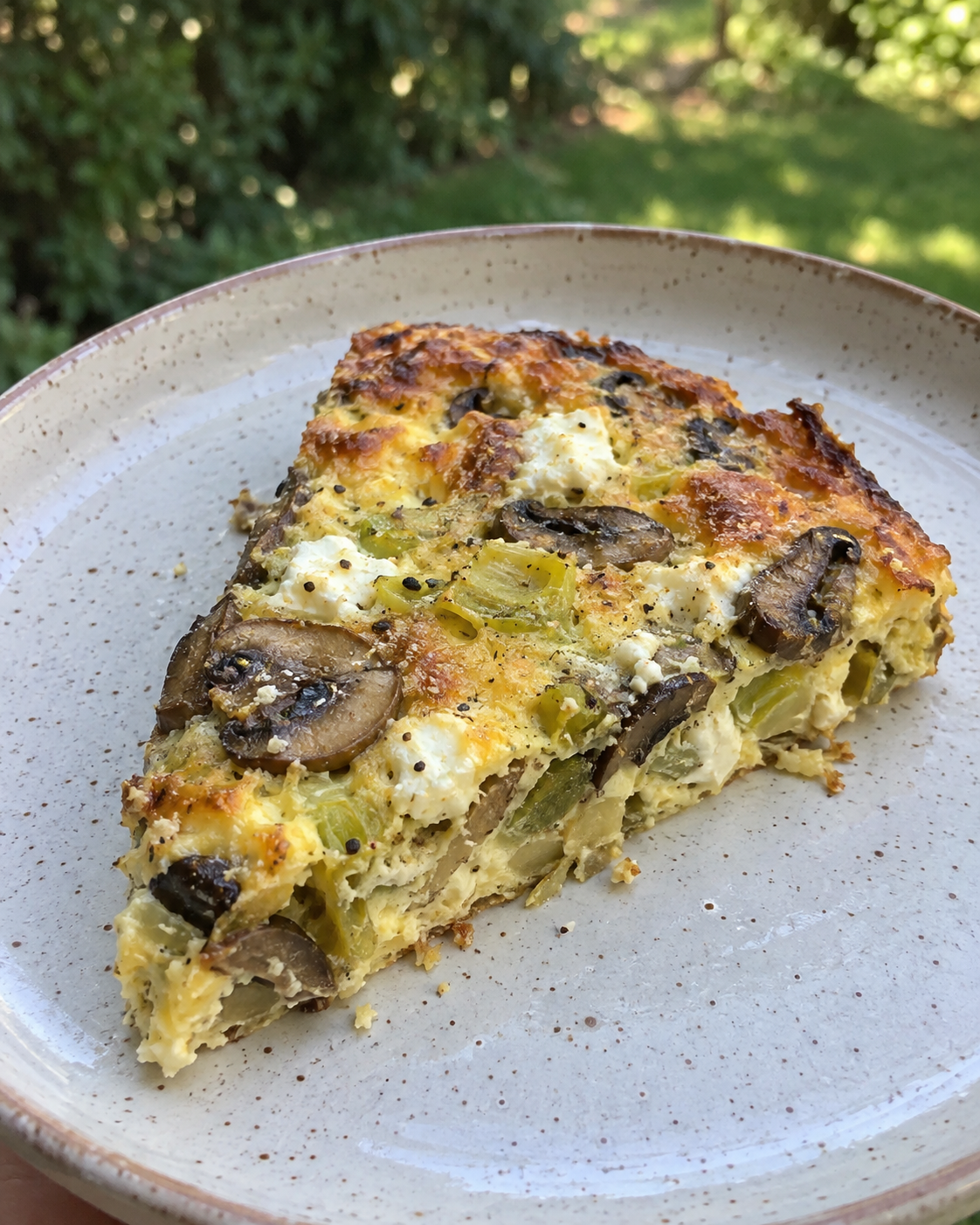
Autumn breakfast: stored sunlight on a plate.
Filling
2 tbsp pastured butter or ghee
1 medium yellow onion, thinly sliced
3 cups mixed wild or cultivated mushrooms (chanterelles, porcini, oyster, maitake, shiitake or cremini), torn or thickly sliced
3 cloves garlic, minced
2 tbsp fresh thyme leaves, divided
2 tbsp flat-leaf parsley, chopped
1 tbsp fresh chives, chopped
Baja Gold sea salt and black pepper
4 oz goat cheese, crumbled (raw goat cheese aged 60+ days, or fresh pasteurized chèvre)
Swaps: if you can’t find wild mushrooms, cremini and shiitake work beautifully. A small handful of dried porcini, soaked in warm water, adds deep umami; save the soaking liquid for stock. Sheep’s milk feta or aged Manchego can replace the goat cheese.
Steps
Melt the butter in the skillet over medium heat and let it foam gently. Add the onion and a pinch of salt and cook slowly, 6–8 minutes, until soft and starting to caramelize at the edges. Don’t rush this.
Turn the heat to medium-high and add the mushrooms and garlic. Cook, stirring only now and then, until the mushrooms release their liquid, soak it back up and turn deep gold at the edges, 8–10 minutes.
Stir in two-thirds of the thyme, the parsley and the chives. Season with salt and plenty of pepper and spread evenly.
Finish with the master method. Scatter the goat cheese and remaining thyme over the top before baking, and bake 18–22 minutes.
Serve it with a small pile of bitter greens dressed in lemon and olive oil (watercress, frisée or young arugula), and a cup of bone broth on cold mornings.
Winter · Farm Frittata with Homemade Herb Sausage, Butternut, Leeks & Kale
The hearty one: for a cold morning with real work ahead of it.
Homemade Herb Pork Sausage
Makes 1 lb, enough for two frittatas. Make it 2 hours to 3 days ahead.
Once you see how easy homemade sausage is (ground pork, salt and a few herbs), you may never buy breakfast sausage again. You know exactly what’s in it, and the fennel, sage and rosemary give it that classic Italian-farmhouse flavor.
1 lb ground pastured pork
1½ tsp Baja Gold sea salt
1 tsp freshly ground black pepper
2 tbsp fresh sage, finely chopped (or 1 tbsp dried)
1½ tsp fresh rosemary, finely chopped (or ½ tsp dried)
½ tsp fennel seeds, lightly toasted and crushed
¼ tsp red pepper flakes (optional)
1 clove garlic, finely grated (optional)
Mix. In a bowl, combine everything with clean hands until just mixed. Overmixing makes it tough.
Rest. Cover and refrigerate at least 2 hours, ideally overnight (up to 3 days). Don’t skip this. The salt and herbs need time to work into the meat; fresh-mixed sausage tastes flat, and rested sausage tastes like sausage.
Cook. Crumble half the sausage into the skillet over medium heat and cook 7–10 minutes, breaking it up, until deeply browned and cooked through (160°F). Keep the rendered fat in the pan.
Freeze the other half raw, wrapped flat, for up to 6 months.
Store-bought option: 8 oz pastured pork or beef sausage, removed from its casings. Teton Waters Ranch, Force of Nature, Niman Ranch, US Wellness Meats or your local butcher all work. Four slices of pastured bacon, diced, work too.
Filling
½ batch homemade herb sausage (about 8 oz), or store-bought from above
2–3 tbsp grass-fed ghee, butter or bacon fat, divided
2 cups butternut squash cut in ½-inch cubes, or Yukon Gold or red potatoes, or a mix
1 large leek, white and pale green parts, halved, rinsed and sliced
3 cloves garlic, minced
1 tbsp fresh thyme leaves
1 tsp fresh rosemary, finely chopped
1 bunch kale (curly or lacinato), stems removed, thinly sliced (about 4 cups)
Baja Gold sea salt and black pepper
⅓ cup freshly grated Parmigiano-Reggiano, or ½ cup grated Gruyère
To garnish: chopped parsley, fresh thyme and flaky salt
Swaps: Swiss chard or collards for the kale, sweet potato for the squash, crumbled ground lamb or beef sausage for the pork. Add 4 oz sliced mushrooms with the leeks if you like.
Steps
Chop the kale first and let it sit while you cook the rest. Cutting kale and letting it rest 30–40 minutes before cooking gives its sulforaphane time to form.
Brown the sausage in the skillet as above, then lift it out with a slotted spoon. Leave the fat in the pan.
Cook the squash or potatoes. Add 1–2 tbsp ghee if the pan looks dry, then add the cubes in a single layer. Cook undisturbed for 4–5 minutes to brown the bottoms, then stir and cook 8–10 minutes more, until golden and fork-tender. Season with a pinch of salt and move to a bowl.
Cook the leeks. Add 1 tbsp ghee and the leek and cook 5 minutes, until soft. Add the garlic, thyme and rosemary and cook 1 minute, until fragrant.
Wilt the kale. Add the kale with a pinch of salt and stir 2–3 minutes, just until wilted but still a little toothsome.
Combine. Return the squash and sausage to the skillet, season with salt and pepper and spread evenly.
Finish with the master method. Scatter the cheese on top and bake 25–30 minutes; this skillet is full. Garnish with parsley, thyme, flaky salt and pepper.
Serve it with fermented ketchup, a simple green salad (try my Seasonal Mixed Greens with Lemon-Dijon Vinaigrette) and strong coffee or tea.
Storage & Make-Ahead (all seasons)
Refrigerate up to 3–4 days. Frittata is excellent cold. A cold slice packed for lunch is one of the best midday meals there is, and the flavors deepen by day 2.
Reheat at 300–325°F for 10–15 minutes.
Make-ahead: cook the fillings up to 24 hours ahead, then add fresh eggs and bake in the morning. Or bake the whole frittata a day ahead.
Freeze slices, individually wrapped, up to 1 month.
Pregnancy note: frittatas are fully cooked, so the eggs are safe. If you’re pregnant, choose pasteurized goat cheese and chèvre over raw-milk versions.
Nourishment Notes
Pasture-raised eggs are the base of every season: about 50 grams of complete protein across the skillet, plus choline for brain and liver, and the fat-soluble vitamins A, D, E and K2. Deep orange yolks reflect the carotenoids a hen gets from real pasture and sun. A warm, protein-rich breakfast in the morning light supports steady energy and blood sugar and helps set your circadian rhythm for the day.
Homemade pastured sausage is one of the easiest kitchen upgrades there is. Commercial breakfast sausage often includes dextrose or corn syrup, preservatives and added nitrites. Pigs raised outdoors on pasture and forage carry more vitamin D in their fat, and a better fatty-acid balance than confinement pork. Pork brings B vitamins (especially thiamine and B12), zinc and selenium. The rendered fat is great cooking fat, so don’t drain it.
Kale is the dark leafy green of cold-weather farm cooking, rich in vitamin K1, vitamin A (as carotenoids), vitamin C, calcium and magnesium. The carotenoids and vitamin K are fat-soluble, so cooking kale in pork fat or ghee and pairing it with eggs helps you absorb them. Its glucosinolates (the same sulfur family as broccoli and cabbage) turn into sulforaphane when the leaves are cut, which is why the chop-and-wait step is worth it.
Wild mushrooms each bring something different: lentinan (a beta-glucan) in shiitake, beta-glucans in maitake, and ergothioneine, an antioxidant the body concentrates in its tissues, especially in porcini and oyster mushrooms. Mushrooms exposed to UV light turn ergosterol into vitamin D2, so a wild chanterelle that grew under an open canopy is a little record of that light. To boost store-bought mushrooms, set them gill-side up in direct sun for an hour before cooking; their vitamin D can climb dramatically.
Sweet potato, butternut squash and potatoes give these frittatas slow-burning carbohydrate for a full morning. Sweet potato and squash bring beta-carotene, which the body converts to vitamin A with the help of fat. Potatoes bring vitamin C, B6 and more potassium than a banana, plus resistant starch, especially in leftovers eaten cold. Potatoes have been cultivated in the Andes for thousands of years and are real ancestral food, eaten whole, with fat, alongside protein.
Leeks, onions and garlic bring quercetin and prebiotic fibers (inulin-type fructans) that feed beneficial gut bacteria. Asparagus adds folate and its own prebiotic inulin, which makes it a nice spring wake-up for digestion.
Butter, ghee and bacon fat are the traditional cooking fats, with butyrate, CLA and fat-soluble vitamins. Aged cheeses like Parmigiano-Reggiano and Alpine Gruyère bring concentrated protein, calcium and vitamin K2, and aging makes them easier to digest. Goat cheese’s casein is closer to A2, which many people who don’t do well with cow dairy find easier.
Fresh herbs (thyme, rosemary, sage, oregano, parsley and chives) bring aromatic compounds like thymol and carvacrol, plus chlorophyll and flavonoids.
For your cycle: every version is built on protein and fat to keep blood sugar steady, which helps all month long. In the luteal phase, lean toward the winter or spring versions: sweet potato and squash give you the slow carbs your body asks for before your period. During menstruation, the pork and kale add iron, and the eggs and kale’s vitamin C help you use it. In the follicular phase, the lighter spring and autumn vegetable frittatas fit your rising energy.
Sourcing
Eggs: pasture-raised (not just “cage-free,” which means very little), from a local farm, a neighbor’s flock or Pete & Gerry’s. Look for marigold-orange yolks.
Ground pork: pastured, from Seven Sons, White Oak Pastures, Jones Dairy Farm or a local farm
Store-bought sausage: Teton Waters Ranch, Force of Nature, Niman Ranch, US Wellness Meats or your local butcher
Mushrooms: a farmers’ market or a local forager whose name you know. Far West Fungi (West Coast) and Smallhold (East Coast) grow great cultivated varieties. Dried porcini from a good Italian import make a great pantry backup.
Raw milk, cream and cheese: realmilk.com lists raw dairy sources across the US. For pasteurized options, try Organic Valley Grassmilk.
Goat cheese: Vermont Creamery, Cypress Grove, Laura Chenel, Haystack Mountain or a local goat dairy
Parmigiano-Reggiano: DOP-stamped, aged 24+ months. Gruyère: Swiss Alpine, aged 8+ months.
Butter and ghee: grass-fed butter, raw from realmilk.com or local, and grass-fed ghee
Vegetables and herbs: a farmers’ market in season. Choose firm potatoes with no green tinge; green means solanine, so cut it away or skip that potato. Thyme, parsley and chives are easy to grow in a windowsill pot.
Fennel seeds: buy them whole and toast briefly before crushing
Fermented ketchup: Hawthorne Valley Cultured Ketchup or homemade
Sea salt: Baja Gold
— Anna aka Food Marshall