Slow-Braised Oxtail with Veal, Lamb, Beef, or Wild Game
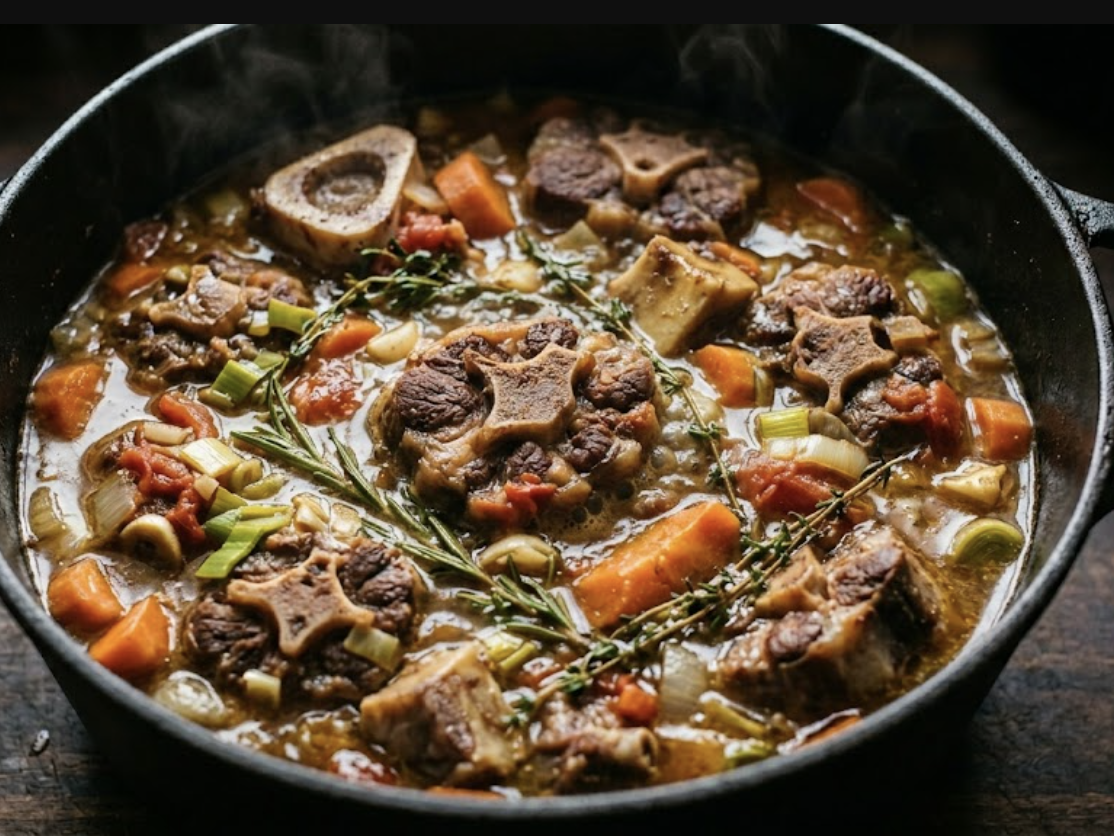
Falling-off-the-bone tender oxtail, slow-cooked with aromatics, tomatoes, and bone broth — built on a foundation of marrow bones and meaty cuts for the deepest, most nourishing braise possible.
Yield: 6 servings
Active: 45 min · Total: 4 hr 30 min
Year-round (peak autumn–winter)
Ingredients
3–4 lb veal oxtail (rabo de ternera), cut into 2-inch sections — ask your butcher to do this (or substitute lamb, beef, or wild game)
3–4 lb veal short ribs, shank, marrow bones, and additional bones (for depth and richness) (or substitute lamb, beef, or wild game)
1 tbsp sea salt
Freshly cracked black pepper
3 tbsp grass-fed tallow, lard, or ghee
2 large yellow onions, finely chopped
3 medium carrots, finely chopped
2 leeks, white and pale-green parts only, halved, rinsed, and sliced into half-moons
6 cloves garlic, smashed
2 tbsp tomato paste
1 cup peeled, chopped fresh tomatoes (or 1 cup canned crushed tomatoes — San Marzano if available)
4 sprigs fresh thyme
3 sprigs fresh rosemary
2 bay leaves
4–6 cups beef bone broth (preferably homemade)
1 cup filtered water (as needed)
For serving: fresh chopped parsley, lemon zest, high-quality extra-virgin olive oil, freshly grated raw sharp aged cheese, flaky sea salt
Method
Season the oxtail, short ribs, and shanks generously on all sides with sea salt and black pepper.
Heat 2 tbsp tallow in a large heavy Dutch oven over medium-high heat. Working in batches (don't crowd the pan), sear the oxtail, short ribs, and shanks on all sides until deeply golden brown — about 3–4 minutes per side. Transfer to a plate. Set the marrow bones aside (no need to sear).
Reduce heat to medium. Add another tbsp of tallow to the pan. Add the chopped onions, carrots, leeks, and a pinch of sea salt. Cook 12–15 minutes, stirring occasionally, until the vegetables are softened and just beginning to caramelize.
Add the smashed garlic and cook 1 minute more.
Add the tomato paste. Stir to coat the vegetables. Cook 2 minutes, until the paste deepens to a brick-red color.
Add the chopped tomatoes, thyme, rosemary, and bay leaves. Stir to combine.
Return the seared meat to the pot. Add the marrow bones, nestling them among the meat. Pour in enough bone broth to nearly cover the meat (about 4–6 cups). Add 1 cup of filtered water if needed.
Bring to a gentle simmer. Cover and reduce heat to low. Simmer 3–3½ hours, until the meat is falling off the bone and the broth has reduced and thickened. Stir occasionally and skim any foam in the first 30 minutes.
Taste and adjust salt. Remove the bay leaves and tough herb stems. Lift out the marrow bones and scoop the soft marrow back into the broth (or serve the bones alongside for guests to scoop themselves).
Serve the meat with the rich braising sauce ladled over. Top each portion with chopped fresh parsley, a small grating of lemon zest, a drizzle of high-quality olive oil, freshly grated sharp aged raw cheese, and a pinch of flaky sea salt.
Variations
With root vegetables: Add 1 cup diced parsnip, turnip, or rutabaga in step 3.
With fingerling potatoes: Add 1 lb halved fingerling potatoes in the last 60 minutes.
With saffron: Add a pinch of saffron threads to the broth for a richer Spanish flavor.
Beef version: Substitute grass-fed beef oxtail and short ribs. Slightly more robust flavor, slightly longer cook time (about 4 hours).
Lamb version: Substitute lamb shanks and lamb neck for the veal cuts. Beautiful with a pinch of cinnamon and a few dried apricots added to the braise.
Game variation: Substitute wild boar shank or venison shoulder for the veal cuts. Beautiful for autumn and winter.
Pairs Well With
Roasted root vegetables, a simple green salad with sherry vinaigrette, mashed cauliflower, or root vegetable purée. For a complete cold-weather feast, serve over creamy polenta-style mashed parsnips with a glass of bone broth alongside.
Sourcing
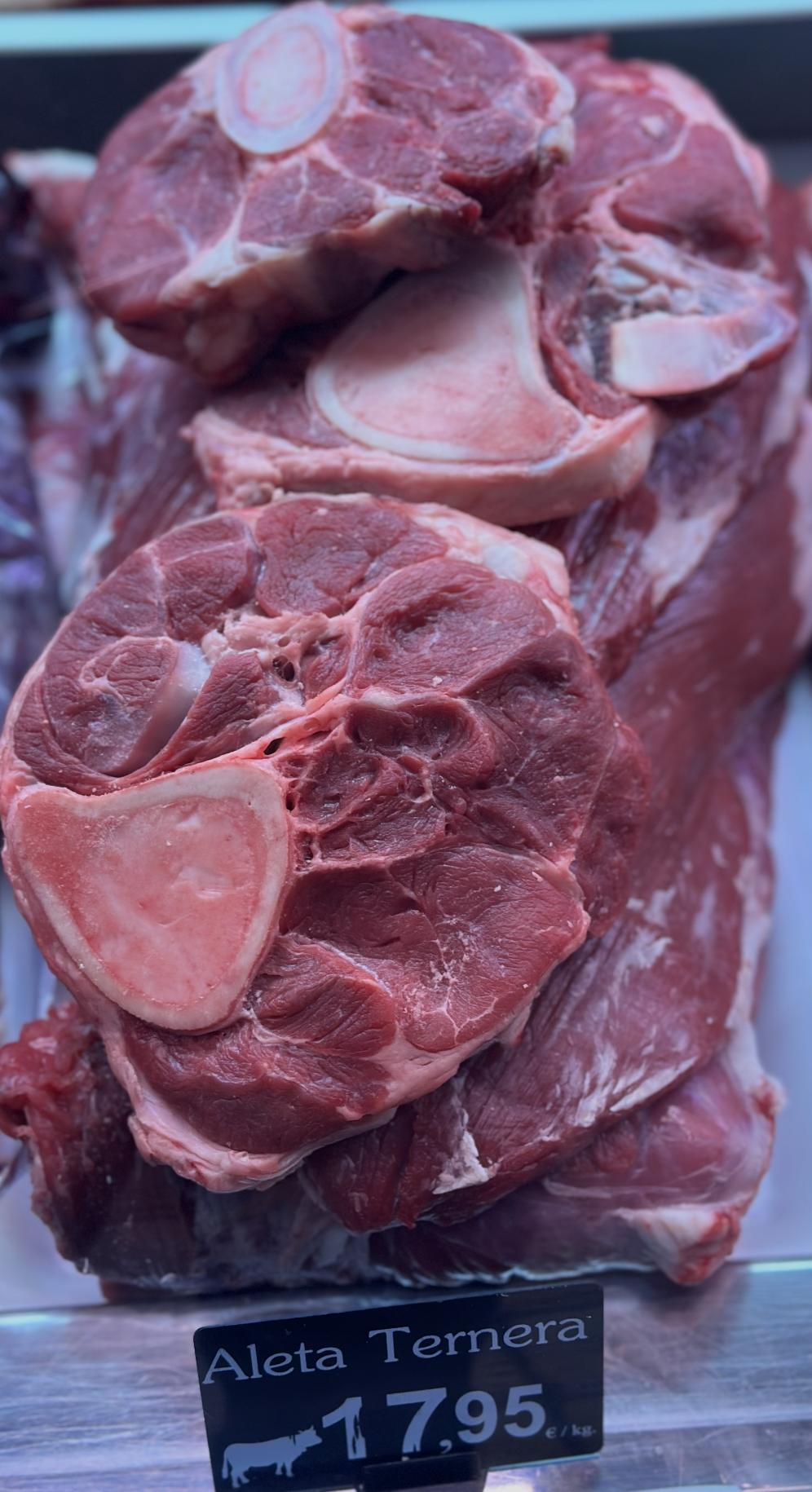
Veal oxtail and short ribs. From a local pasture-based butcher or farm. Look for pale pink, well-marbled meat from rose veal (older calves, raised on pasture and milk) rather than industrial milk-fed white veal. Ask the butcher for the "rabo de ternera" cut already sectioned into 2-inch pieces, which saves significant prep time.
Marrow bones. Beef femur bones cross-cut into 2-inch sections deliver the richest marrow. From a pasture-based butcher or farm. The marrow should be deep cream-to-pink when raw, never gray.
Beef bone broth. Homemade from grass-fed bones is the gold standard. If purchasing, look for brands like Bonafide Provisions, Kettle & Fire, or Brodo — single-ingredient (bones, water, vegetables, herbs) with no fillers, preservatives, or "natural flavoring."
Grass-fed tallow. Rendered from grass-finished beef. Fatworks, Epic, and US Wellness Meats are reliable brands. Or render your own from suet trimmings from your butcher.
Raw aged cheese (for finishing). A sharp aged sheep or cow cheese for grating — aged Manchego, Pecorino Romano, raw-milk Parmigiano-Reggiano, or aged Idiazábal all work beautifully. The cheese should be hard enough to grate but assertive enough to season the rich broth.
Tomatoes. San Marzano DOP tomatoes from Italy are the traditional reference standard for sauces and braises — sweet, low-acid, and balanced. If unavailable, look for jarred whole tomatoes from small Italian or Spanish producers.
Sea salt. Baja Gold mineral sea salt for cooking, fleur de sel for finishing.
More Slow-Cooked Meat Recipes
For more nourishing, deeply satisfying slow-cooked meat dishes:
Slow-Braised Grass-Fed Brisket with Bone Broth, Dried Fruit & Roasted Garlic
Crispy-Edged Slow-Cooked Lamb Shoulder with Apricot & Roasted Vegetables
Slow-Roasted Pork Shoulder with Caramelized Onions and Herbs
— Anna aka Food Marshall